Post
Creative Playhouse and Pretend Store Toy Ideas
May
Creative Playhouse and Pretend Store Toy Ideas
Creative playhouses and pretend store toys are some of the best tools for encouraging imagination, communication, teamwork, and social development in children. In 2026, parents and educators continue to recommend pretend play environments because they provide children with endless opportunities to invent stories, solve problems, and explore real-world situations through fun and interactive experiences.
Unlike passive entertainment, playhouses and pretend store toys encourage children to actively participate in storytelling and role-playing. Whether children are pretending to run a grocery store, own a café, host tea parties, or manage a family home, imaginative play helps them develop creativity, confidence, and emotional intelligence while staying engaged for hours.
Research consistently shows that pretend play supports language development, social interaction, empathy, and independent thinking. Open-ended role-play toys are especially valuable because they grow with children and allow endless creative possibilities.
This guide explores the best creative playhouse and pretend store toy ideas, their educational benefits, and how parents can create engaging imaginative play experiences at home.

Why Playhouses and Pretend Stores Are Important
Pretend play environments help children explore social roles and develop important life skills through imagination.
Benefits of Playhouse and Pretend Store Toys – Creative Playhouse and Pretend Store Toy Ideas
1. Encourages Creativity and Storytelling
Children use pretend play to:
- Create stories
- Invent characters
- Build imaginary worlds
- Explore adventures
- Practice role-playing
Open-ended imaginative play helps children become more flexible and creative thinkers.
2. Improves Communication Skills
Pretend store and playhouse activities encourage children to:
- Practice conversations
- Learn social interaction
- Build vocabulary
- Develop storytelling skills
Children naturally imitate real-life conversations they observe during shopping, cooking, and family activities.
3. Supports Social and Emotional Development
Role-playing activities help children:
- Practice empathy
- Learn cooperation
- Build confidence
- Understand emotions
- Improve teamwork
Pretend social situations also help children become more comfortable interacting with others.
4. Encourages Problem-Solving
During pretend play, children constantly:
- Organize ideas
- Solve imaginary challenges
- Adapt stories creatively
- Make decisions independently
These experiences help strengthen critical thinking and emotional regulation.
5. Provides Healthy Screen-Free Entertainment
Playhouses and pretend stores encourage active participation instead of passive digital entertainment.
Many families now prioritize imaginative toys that support creativity and hands-on learning while reducing excessive screen time.

Best Creative Playhouse Ideas for Kids
1. Indoor Cottage Playhouses
Indoor playhouses remain one of the most popular pretend play setups for younger children.
Kids can use cottage playhouses to:
- Pretend to live independently
- Host tea parties
- Create family stories
- Build secret hideouts
- Play house with friends
Why They’re Popular
Indoor playhouses create private imaginative spaces where children naturally invent stories and social games.
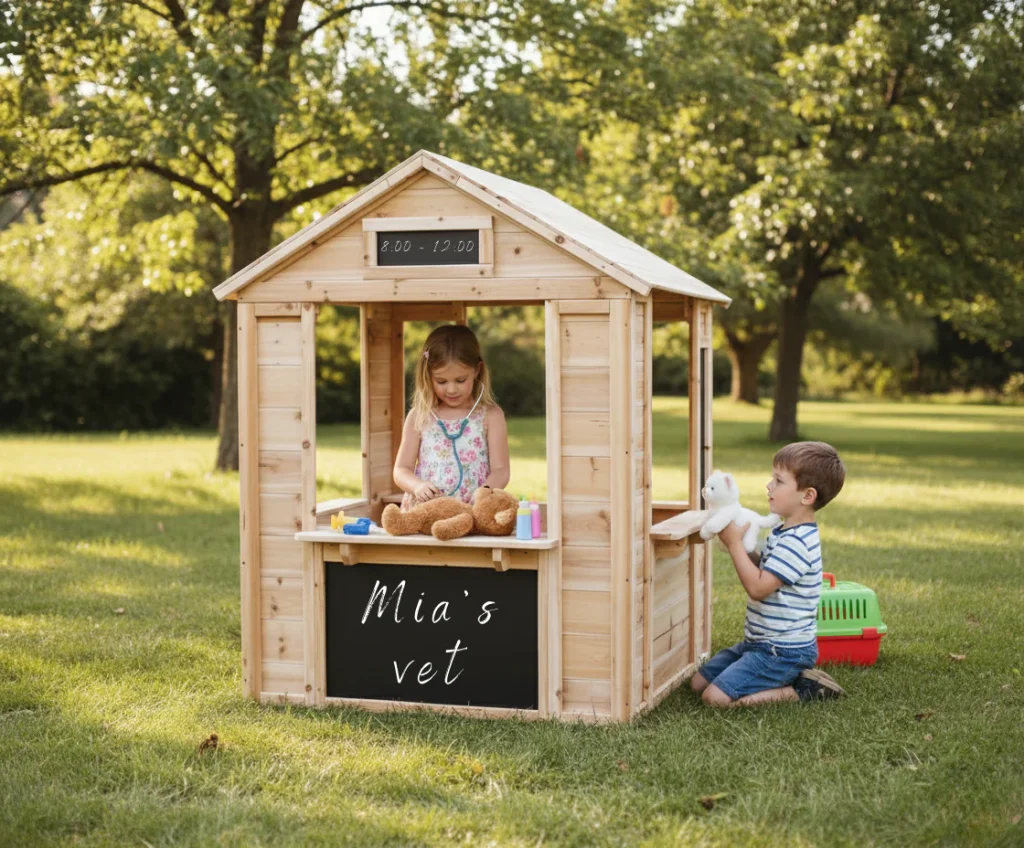
2. Outdoor Wooden Playhouses
Outdoor playhouses provide larger imaginative environments for active role play.
Popular themes include:
- Farmhouses
- Adventure cabins
- Garden cafés
- Pirate hideouts
- Backyard castles
Benefits
Outdoor playhouses encourage:
- Group storytelling
- Physical activity
- Cooperative play
- Creativity
Many modern outdoor playhouses now include pretend kitchens, mailboxes, picnic tables, and interactive accessories.
3. Pop-Up Play Tents
Pop-up tents remain excellent budget-friendly imaginative play options.
Children use play tents as:
- Reading corners
- Camping adventures
- Space stations
- Secret clubs
- Pretend stores
Why Kids Love Them
Play tents are lightweight, portable, and easy to customize with imaginative themes.
4. Café and Restaurant Playhouses
Restaurant-themed playhouses combine kitchen role play with social interaction.
Children can:
- Take customer orders
- Serve meals
- Create menus
- Pretend to cook food
- Run cafés
Skills Developed
- Communication
- Teamwork
- Creativity
- Problem-solving
Restaurant role play is especially effective for sibling and group play.
5. Adventure and Fantasy Playhouses
Fantasy-themed playhouses allow children to create magical stories and imaginative adventures.
Popular themes include:
- Castles
- Treehouses
- Space stations
- Princess palaces
- Superhero headquarters
Educational Benefits
Fantasy role play encourages:
- Storytelling
- Emotional expression
- Creativity
- Social interaction
Children often remain engaged for long periods because fantasy play allows endless imaginative freedom.
Best Pretend Store Toy Ideas
1. Grocery Store Play Sets
Pretend grocery stores are among the best toys for social and educational role play.
Typical accessories include:
- Toy cash registers
- Shopping baskets
- Play food
- Price tags
- Pretend money
Why They’re Valuable
Grocery store toys help children:
- Practice communication
- Learn counting skills
- Develop organization habits
- Understand social interaction
Children naturally imitate real shopping experiences during imaginative store play.
2. Farmers Market Stands
Farmers market toys encourage children to:
- Organize fruits and vegetables
- Practice buying and selling
- Create pretend businesses
- Interact socially
Skills Developed
- Cooperation
- Early math skills
- Creativity
- Teamwork
Market play also introduces children to healthy foods and organization skills.
3. Ice Cream and Dessert Shops
Dessert-themed pretend stores remain extremely popular with preschool children.
Kids can pretend to:
- Serve ice cream
- Build desserts
- Take customer orders
- Operate pretend cafés
Benefits
These toys encourage:
- Storytelling
- Sharing
- Communication
- Imaginative thinking
Colorful accessories also make dessert role play visually engaging and fun.

4. Toy Cash Registers and Checkout Counters
Pretend checkout systems allow children to:
- Scan products
- Count money
- Manage transactions
- Organize purchases
Educational Value
Cash register toys help children practice:
- Basic math
- Communication
- Problem-solving
- Responsibility
Interactive checkout play also encourages social confidence.
5. Pretend Food Trucks and Snack Stands
Food truck role play combines mobility with creative storytelling.
Children can:
- Create menus
- Sell snacks
- Take customer orders
- Organize pretend businesses
Why They’re Trending
Food truck toys encourage:
- Entrepreneurship role play
- Communication
- Creativity
- Cooperative interaction
These toys remain highly popular because they combine realistic experiences with imaginative freedom.
How to Create a Creative Pretend Store at Home
Parents can build simple pretend stores using household items and basic toys.
Ideas include:
- Empty food boxes
- Toy shopping carts
- Printed menus
- Play money
- Handmade signs
- Storage shelves
DIY pretend stores often become even more engaging because children help create the environment themselves.
Best Accessories for Playhouses and Pretend Stores
Creative accessories help expand imaginative play even further.
Popular additions include:
- Aprons and costumes
- Toy food
- Chalkboards
- Menus
- Shopping baskets
- Toy phones
- Decorative lights
- Pretend receipts
Accessories encourage more detailed storytelling and role-play scenarios.
Best Playhouse and Pretend Store Toys by Age Group
Toddlers (Ages 2–4)
Recommended toys:
- Pop-up tents
- Simple grocery sets
- Soft pretend food
- Mini playhouses
Focus:
Sensory exploration, imitation, and basic communication.
Preschool Kids (Ages 4–6)
Recommended toys:
- Grocery stores
- Restaurant playhouses
- Ice cream stands
- Café role play sets
Focus:
Storytelling, teamwork, and creativity.
School-Age Kids (Ages 7–10)
Recommended toys:
- Advanced market systems
- Outdoor playhouses
- Food truck toys
- Entrepreneur-themed pretend stores
Focus:
Problem-solving, leadership, and independent role play.
Pretend Play Trends in 2026
Creative playhouses and pretend store toys continue evolving with modern educational trends.
Popular trends include:
- Eco-friendly wooden toys
- Montessori-inspired pretend play
- Interactive café systems
- STEM business role play
- Modular playhouse designs
- Inclusive pretend play themes
Parents increasingly seek imaginative toys that combine learning, creativity, and social development.
Tips for Encouraging More Imaginative Play
To support creative pretend play:
- Rotate toys regularly
- Allow children to lead the stories
- Create themed play spaces
- Encourage group role play
- Join the play occasionally
- Add real-life inspiration
Experts emphasize that unstructured imaginative play is one of the best ways to support healthy emotional and cognitive development.
Final Thoughts
Creative playhouse and pretend store toy ideas provide children with exciting opportunities to explore imagination, communication, teamwork, and creativity through hands-on role play experiences.
Whether children are running pretend grocery stores, hosting tea parties, operating cafés, or building fantasy adventures inside imaginative playhouses, these toys encourage meaningful learning while making playtime fun and engaging.
By choosing open-ended pretend play toys that inspire storytelling and social interaction, parents can create enriching screen-free experiences that help children build confidence, curiosity, emotional intelligence, and lifelong creativity.
