Pretend Play Toys, Post
How Kids Doctor Play Sets Build Empathy and Reduce Anxiety
May
How Kids Doctor Play Sets Build Empathy and Reduce Medical Anxiety
A high-quality kids doctor play set is far more than just a box of plastic gadgets; it is a sophisticated gateway to developing emotional intelligence, nurturing a sense of care for others, and building a technical vocabulary related to the most complex machine on Earth: the human body. It transitions the child from a passive recipient of medical “updates” to an active administrator of health, turning “science time” into a compassionate mission.

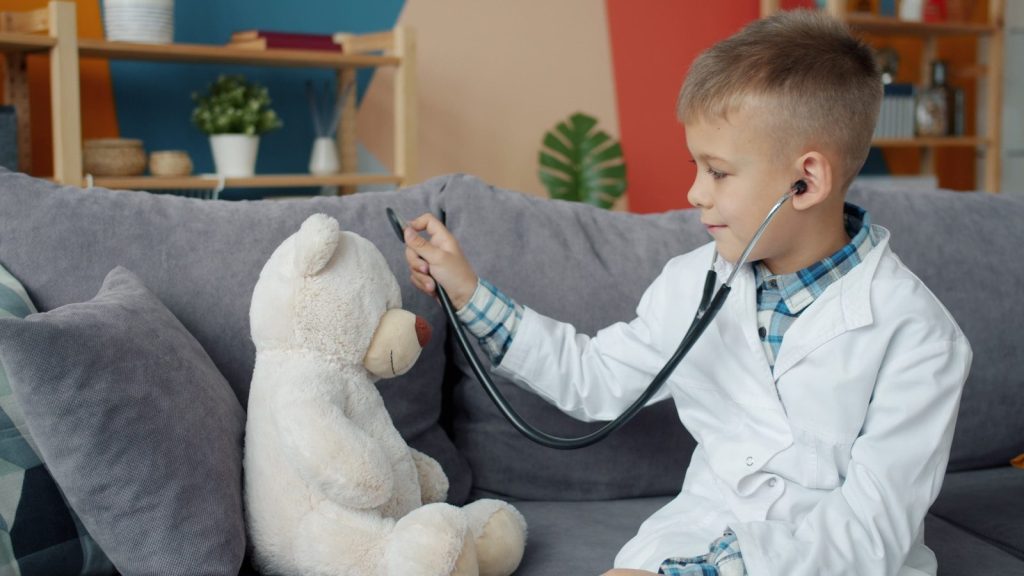
Playing ‘doctor’ helps children view medical tools as helpful instruments rather than scary objects.
The Therapeutic Power of Role-Reversal: From User to Admin
One of the primary reasons kids doctor play sets are so effective in reducing anxiety is the profound concept of “role-reversal.” In a real clinic, the child occupies the role of the “Standard User”—often feeling small, vulnerable, and completely lacking administrative privileges. Decisions are made for them, and things are done to them. When they engage with a doctor kit at home, the power dynamics shift entirely. The child gains “Administrator Access” to the medical scenario.
Familiarity and Comfort through Tactile Exploration
By examining their stuffed animals or even their parents, children get to handle the same tools that usually trigger their anxiety. At home, they are in a “sandbox environment” where they can test these tools without the threat of pain. They can toggle the thermometer, press the “syringe,” and peer through the otoscope at their own pace. This familiarity breeds a sense of technical comfort. When they encounter these tools again during a real-life checkup, the brain’s “threat detection system” is not triggered. Instead, they remember the fun they had at home, making the real-life clinical experience much smoother for the child, the parents, and the medical staff.
The Hardware of Life: Introducing Human Anatomy
Beyond the emotional benefits, kids doctor play sets serve as a child’s first “Hardware Manual” for the human body. They introduce the concept that the body is a series of interconnected systems that require regular maintenance and occasional “debugging.”
The Physics of Diagnostics
A great doctor kit introduces basic physiological variables. For example, using a toy stethoscope introduces the child to the rhythmic cycle of the heart. For older children, this can be an entry point into calculating Heart Rate (BPM), using the simple formula:
$$BPM = \frac{beats}{time\ (seconds)} \times 60$$
They begin to understand that a faster beat might mean the “system” is working harder (like a CPU under high load), while a steady beat indicates a healthy “idle state.” They learn about the respiratory system as the body’s cooling and oxygenation layer, and the skin as a protective “firewall” that sometimes needs a “patch” (a bandage) to keep out environmental “viruses” or “malware” (bacteria).
Building Empathy and The “Collaborative Support” Logic
At its core, medicine is about “User Support” for human beings. When children engage with kids doctor play sets, they are practicing the fundamental skill of empathy. To be a successful “doctor” in their play, the child must listen—not just with the stethoscope, but with their heart. They must ask: “Where does it hurt?” and “How can I help you feel better?”
Nurturing Compassion through Simulation
This process requires the child to step outside their own perspective and simulate the feelings of another. “Is the teddy bear cold? Does the doll need a bandage for her scraped knee?” These simple questions are the building blocks of a compassionate, pro-social personality. By using kids doctor play sets to nurture others, children develop a deep, early understanding of kindness and the importance of supporting those in need. This mirrors the collaborative environment of a modern tech team, where identifying a problem (a “symptom”) and helping a teammate (the “patient”) find a solution is the key to overall success.

A well-organized kit encourages responsibility and keeps the medical ‘practice’ ready for action.
Developing Language and Fine Motor Precision
Using kids doctor play sets also provides a significant “version update” to a child’s cognitive and physical development. The linguistic benefits are immense; they move from simple labels to complex anatomical terms like “circulatory system,” “lungs,” and “diagnostics.” This expansion of vocabulary allows them to communicate their own physical needs more clearly to adults.
Fine Motor “Drivers”
The physical act of being a doctor requires high-precision motor control. Carefully wrapping a bandage around a small doll’s arm, squeezing the plunger on a toy syringe, or placing the stethoscope in exactly the right “sector” of the chest are tasks that refine the pincer grip and hand-eye coordination. This combination of linguistic and physical exercise makes the doctor kit one of the most well-rounded educational “frameworks” available in the toy world.
Choosing the Best Kids Doctor Play Set: A Selection Table
To ensure you select the right “hardware” for your little physician, consider the following comparison between material types:
| Feature | Wooden Doctor Sets | Electronic Plastic Sets |
|---|---|---|
| Durability | Extremely high; heirloom quality. | Moderate; parts can be fragile. |
| Interactivity | Relies on “Open-Source” imagination. | Lights, “heartbeat” sounds, and digital displays. |
| Tactile Feel | Natural, warm, and weighted. | Smooth, lightweight, and vibrant. |
| Safety | Sustainable, BPA-free, no microplastics. | BPA-free; often features rounded edges. |
Conclusion: One “Checkup” at a Time
Investing in kids doctor play sets is a wonderful way to support your child’s emotional growth and prepare them for the real-world complexities of health and wellness. By turning a source of fear into a source of fun, nurturing, and “system logic,” you are helping your child build a persistent foundation of confidence and empathy. Whether they grow up to be professional surgeons, pediatricians, or high-level developers in Da Nang, the lessons in compassion and logical diagnostics learned in the playroom will last a lifetime. Deal out the “prescriptions” for kindness, grab your stethoscope, and watch your child’s creative confidence shine!
Frequently Asked Questions (FAQ)
Q: What is the optimal age to start with a doctor play set?
A: Most kids doctor play sets are designed for children aged **3.0 to 6.0 years old**, a developmental phase where imaginative role-play is at its peak. However, younger toddlers can enjoy simplified “junior” kits that focus on large, tactile parts and vibrant colors.
Q: Can a doctor kit really help with a child’s fear of shots?
A: Absolutely. By allowing the child to “give a shot” to their teddy bear in a safe, controlled environment, they are “simulating” the experience. This lets you explain the “quick pinch” and the purpose of the medicine as a “system patch” that keeps them healthy.
Q: Are these toys gender-specific?
A: Not at all! Kids doctor play sets are gender-neutral STEM toys that promote nurturing and scientific inquiry in all children. In 2026, we see a diverse range of colors beyond the traditional pink and blue, focusing on professional aesthetics.
Q: How do I participate in the play without “over-riding” their logic?
A: The best way to engage is to be the “patient.” Describe your “symptoms”—perhaps your “batteries are low” or your “knee has a glitch.” Let your little doctor perform the “diagnostics” and decide on the “treatment.” This empowers them and allows you to witness their problem-solving skills in action.
Q: How should we store the small medical tools?
A: Look for kits that include a sturdy “Doctor’s Bag” or a hard-shell carrying case. Making “inventory management”—checking that the stethoscope, thermometer, and otoscope are all returned to the bag—part of the play helps build a sense of professional responsibility.
