Electronic Learning Toys, Post
Geography Made Fun: The Benefits of Interactive Talking Globes
May
Geography Made Fun: The Benefits of Interactive Talking Globes
For many generations, learning geography meant staring at flat, uninspiring paper maps and trying to memorize long, tedious lists of capital cities and main exports. It was a subject often associated with rote memorization in a quiet classroom rather than exciting, real-world exploration. However, in our increasingly interconnected modern world, having a deep, nuanced understanding of global geography and diverse cultures is more important than ever before. So, how do we make learning about the Earth genuinely thrilling for children?
The answer lies in the incredible educational technology of an interactive talking globe for kids. This innovative educational tool completely transforms a static, traditional sphere into a dynamic, multi-sensory adventure across the continents. If you want to expand your child’s worldview without them having to leave the living room, here is a deep dive into the benefits of this modern STEM toy.

What is an Interactive Talking Globe for Kids?
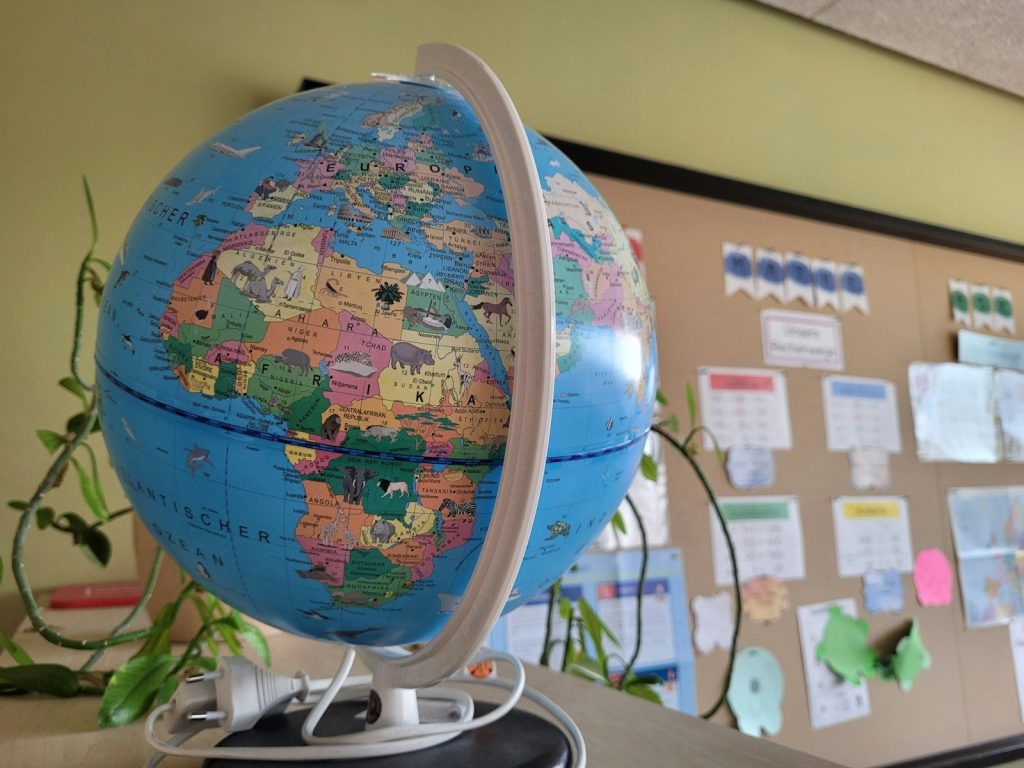
At its core, an interactive talking globe for kids is a high-tech educational device that perfectly combines traditional cartography with advanced digital audio technology. Instead of simply looking at political borders and printed names, children use a specialized “smart stylus” (a digital pen) or built-in touch sensors to physically interact with the surface of the globe.
When they tap the stylus on a specific country, a vast ocean, or a famous historical landmark, the interactive talking globe for kids instantly plays professional, crystal-clear audio recordings. These recordings go far beyond basic naming. They can include the country’s capital city, current population size, official spoken languages, national anthems, currency, and even fascinating trivia about local wildlife and historical events. It is essentially an entire encyclopedia packed into a spinning, talking toy.
The Magic of Augmented Reality (AR) Integration
Many premium models available in 2026 take the learning experience a massive step further by incorporating Augmented Reality (AR). By downloading a secure, free companion app on a parent’s smartphone or tablet and pointing the camera at the interactive talking globe for kids, the physical world literally springs to life on the screen.
Children can watch 3D animations of dinosaurs stomping across prehistoric Pangea, see the Eiffel Tower rise majestically from the surface of France, or observe global weather patterns and ocean currents swirling in real-time. This seamless, magical blend of a physical object with digital AR technology creates an unforgettable, highly immersive learning environment that captivates even the most easily distracted children.

Educational Benefits of an Interactive Talking Globe for Kids
Investing in an interactive talking globe for kids provides profound developmental advantages that go far beyond simply knowing where countries are located on a map.
1. Multi-Sensory Learning and Massive Retention
Extensive educational research consistently shows that children learn best when multiple senses are engaged simultaneously. An interactive talking globe for kids demands exactly that. It requires tactile input (holding the pen, spinning the globe, and finding the exact country), visual engagement (looking at the colorful map and interacting with the 3D AR features), and auditory processing (listening carefully to the spoken facts). This robust, tri-fold approach significantly boosts long-term memory retention compared to reading a geography textbook silently.
2. Fostering Global Citizenship and Deep Empathy
An interactive talking globe for kids does an excellent job of putting the sheer size, scale, and incredible diversity of our planet into perspective for a young mind. As children listen to greetings in different languages, hear diverse styles of music, and learn about various cultural traditions, they develop an early sense of empathy and global awareness. They begin to understand that their own hometown is just one small piece of a much larger, beautifully interconnected global community.
3. Encouraging Independent Exploration and Curiosity
Because the device provides immediate, accurate auditory feedback, children can use the interactive talking globe for kids completely independently. They do not need a parent or teacher to hover over them, read complex words, or explain difficult geographical concepts. This heavily fosters a strong sense of intellectual curiosity and self-driven education. A child might easily spend 30,0 to 45,0 minutes just tapping around the world to see what new, obscure facts they can uncover on their own.

Choosing the Right Globe for Your Home
When selecting the perfect interactive talking globe for kids, pay close attention to the age recommendations and update capabilities. The best models feature a USB connection, allowing parents to connect the globe to a computer and download the latest software updates. Since political borders, population statistics, and country names can change over time, having an updatable globe ensures your child is always learning the most accurate, current information available.
Conclusion
An interactive talking globe for kids is not just a clever toy; it is an incredibly powerful portal to the rest of the world. By turning a traditionally dry subject like geography into a highly engaging, interactive, and gamified experience, it actively inspires a lifelong love of travel, history, and cultural discovery. It is an essential, beautiful addition to any modern home library, playroom, or elementary school classroom.
Frequently Asked Questions (FAQ)
Q: Does an interactive talking globe for kids require batteries to operate?
A: Yes, most models require batteries to operate either the main globe base itself or the smart stylus pen. However, many newer, premium versions feature a built-in, eco-friendly lithium battery that takes about 1,5 to 2,0 hours to fully charge via an included USB cable.
Q: Is the information on the globe completely up to date?
A: High-quality manufacturers frequently update their globe designs and the accompanying AR applications to reflect current political borders and factual demographic data. Look for models labeled “Internet Updatable” for the best longevity.
Q: What age group is this specific educational toy best suited for?
A: While younger children can certainly enjoy the music and lights, an interactive talking globe for kids is generally highly recommended for children aged 5,0 to 12,0 years old. At this age, they possess the cognitive ability to truly grasp the complex facts, understand spatial relationships, and interact with the digital AR features effectively.
Q: Can the volume of the speaking voice be adjusted?
A: Absolutely. Most globes feature an easily accessible volume control knob or button on the base, allowing parents to turn down the audio for quieter, more focused learning sessions in the evening.
