Post, Pretend Play Toys
Mess-Free Fun: The Rise of Fake Pretend Makeup Play Sets
May
Mess-Free Fun: The Rise of Fake Pretend Makeup Play Sets
Every parent of a curious toddler has likely experienced that heart-stopping moment: finding your expensive designer lipstick smeared across the bathroom mirror, the tiles, and your child’s face. Children are naturally drawn to the vibrant colors and daily rituals of their parents’ beauty routines. This attraction is not merely about vanity; it is a fundamental part of “mimicry,” a cognitive process where children model their behavior after the adults they admire. However, real cosmetics are often filled with chemicals, dyes, and oils that are not suitable for sensitive young skin—not to mention the immense mess they create. In a 2026 home environment, where we value both creativity and clean spaces, the pretend makeup play set has become a sensation in the world of modern toys.
A high-quality pretend makeup play set looks and feels like the real thing, but with a brilliant, technical twist: there is no actual pigment, powder, or liquid involved. It is the perfect, mess-free solution that allows children to explore their creativity while keeping your vanity safe and your child’s skin clear. By providing a “hardware-only” version of makeup, parents can encourage imaginative play without the “system errors” of stained carpets or allergic reactions.

Pretend makeup offers all the fun of a beauty routine with zero cleanup required.
What Exactly is “Fake” Pretend Makeup? Understanding the Materials
To the uninitiated, “kids’ makeup” usually refers to washable pastes or cheap dyes. However, a premium pretend makeup play set is a different breed of toy entirely. Unlike “washable” makeup that still involves messy pastes, these sets are made from specialized materials like eco-friendly foam, rubber, and smooth plastic. These materials are engineered to provide a high-fidelity tactile experience without any actual “data transfer” to the skin.
The Tactile Engineering of Foam and Rubber
When a child dips a brush into a pretend “eyeshadow” palette, they are touching high-density foam that feels soft and realistic, but absolutely nothing transfers to the brush or the skin. The lipstick tubes utilize a realistic mechanical twist-up mechanism, the compacts feature real mirrors (often made of shatterproof acrylic), and the glitter looks sparkling and enticing—but it is all safely encased and 100% mess-free. This allows for a “clean-state” play environment where the only thing that changes is the child’s imagination, not the color of their cheeks.
The Cognitive and Physical Benefits of Beauty Play
While it may seem like simple mimicry, playing with a pretend makeup play set offers several important developmental advantages that prepare children for complex physical and social tasks.
1. Developing Fine Motor Skills and “Hardware” Precision
Applying “mascara” with a small wand or carefully dabbing “blush” onto the cheekbones requires a high level of physical precision. These delicate movements help refine fine motor skills and significantly improve hand-eye coordination. Mastering the twist-up mechanism of a lipstick tube or the snap-shut lid of a compact also builds finger strength and dexterity. This level of precision is the hardware equivalent of learning to type or code; it requires the brain to coordinate minute physical movements to achieve a specific “output” in a 3D space.
2. Nurturing Self-Esteem and Modeling Social Rituals
For children, mimicry is a primary form of learning and flattery. By using a pretend makeup play set, they are practicing the self-care rituals they see their parents perform. This type of play allows them to feel “grown-up” and confident. It is not about a desire to change their physical appearance, but about the joy of the process and the creative expression involved in “getting ready” for a grand imaginary event. It is a safe way to explore identity—a literal “UI/UX test” for their future self-image.
3. Encouraging Imaginative Storytelling and Role-Play
A makeup kit is often the starting point for elaborate narrative scenarios. One day, they might be a famous movie star preparing for the red carpet; the next, they are a professional makeup artist working in a high-end salon in Da Nang. This narrative play is essential for linguistic development and social-emotional growth. They are learning to navigate social roles, practice dialogue, and develop complex plotlines, which are vital components of executive function.
High-quality foam textures mimic the look of real makeup without the mess.
Choosing the Best Pretend Makeup Play Set: A Technical Buying Guide
To ensure the most realistic and safe experience for your little one, it is important to look for high-fidelity features that stand up to repetitive use. At zixstory, we recommend evaluating sets based on the following professional criteria:
- Realistic Foam Densities: Look for sets that use high-density foam that “gives” slightly when touched, mimicking the physical resistance of real pressed powder. This provides the tactile feedback necessary for “learning” the ritual.
- Shatterproof Acrylic Mirrors: For absolute safety, ensure the compacts use shatterproof acrylic mirrors rather than real glass. This prevents injuries during the “crash” of a dropped makeup bag.
- Comprehensive Accessory Kit: A great pretend makeup play set should include a variety of items, such as brushes, sponges, lipsticks, blushes, and a stylish cosmetic bag to keep everything organized. Organization is key to ensuring no “data” (pieces) are lost between play sessions.
- Soft-Bristled Brushes: Many premium sets include real, soft-bristled makeup brushes. This adds to the authenticity of the experience and feels wonderful on the child’s skin.
The “Debugging” Aspect: Mess-Free by Design
One of the biggest “bugs” in traditional kids’ makeup is the staining of furniture and clothing. By choosing a 100% fake set, you are implementing a “fail-safe” design. There is no actual color in the set, meaning even if the child “applies” it to your white sofa, there is zero impact on the environment. This design allows parents to say “yes” to creative play more often, as there is no cleanup “overhead” required after the game is over.

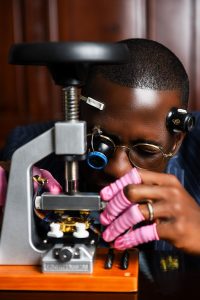
Concentrated play builds the focus needed for academic and future professional success.
Conclusion: Sparkling Imagination without the Stress
A pretend makeup play set is the ultimate “win-win” toy for the modern family. It satisfies a child’s natural curiosity and deep-seated desire to mimic adult beauty routines while providing parents with total peace of mind. With no stains on the carpet and no chemicals on the skin, it is a world of pure, sparkling imagination. Whether your child grows up to be a professional artist, a doctor, or an engineer building Node.js applications, the foundation of focus and creativity begins with these simple, colorful rituals. Treat your little one to their first “glam kit” and watch their creative confidence shine!
Frequently Asked Questions (FAQ)
Q: Is there really no color at all in pretend makeup?
A: No. A true pretend makeup play set is 100% fake. It uses colored foam and plastic to mimic the aesthetics of real makeup, but it will not leave any marks on skin, clothing, or furniture.
Q: What is the recommended age for this toy?
A: These sets are generally ideal for children aged **3.0 to 8.0 years old**. While younger toddlers can enjoy the tactile sensation, they should always be supervised due to small parts like brush handles.
Q: Are the brushes real?
A: Yes! Most premium sets include real, soft-bristled makeup brushes. This adds to the authenticity of the experience and ensures the sensory feedback is as close to the real thing as possible.
Q: How do I maintain and clean the set?
A: Since there is no real makeup involved, the set stays remarkably clean. You can simply wipe the plastic cases and foam inserts with a damp cloth if they accumulate dust.
Q: Will this encourage my child to want real makeup too early?
A: Most child development experts agree that “pretend” versions of adult items help satisfy a child’s curiosity. By giving them their own safe “hardware” to play with, they are often less interested in “debugging” your actual designer cosmetics.
