STEM & Creative Building Toys, Post
The Sparkle of Science: Growing Wonders with Crystal Growing Kits
May
The Sparkle of Science: Growing Wonders with Crystal Growing Kits
Most children are naturally drawn to things that sparkle. Whether it is a shiny pebble found on a beach, a jagged icicle hanging from a roof, or a precious gemstone displayed in a museum, there is a primal curiosity about how nature creates such geometric perfection. While authentic gemstones take millions of years to form under intense pressure deep within the Earth’s crust, crystal growing science kits for kids allow young explorers to witness this breathtaking process in just a few days. It is the perfect blend of rigorous chemistry and artistic beauty, proving that science can be just as “glamorous” as it is educational in the modern 2026 STEM curriculum.
A high-quality kit from zixstory.com is far more than just a simple craft project; it is a direct window into the world of molecular structures and thermodynamics. It turns the kitchen counter into a professional-grade laboratory where the laws of saturation and temperature dance together to create something truly magnificent. By engaging with these kits, children move beyond being passive consumers of technology and become active participants in the chemical reactions that shape our physical world.
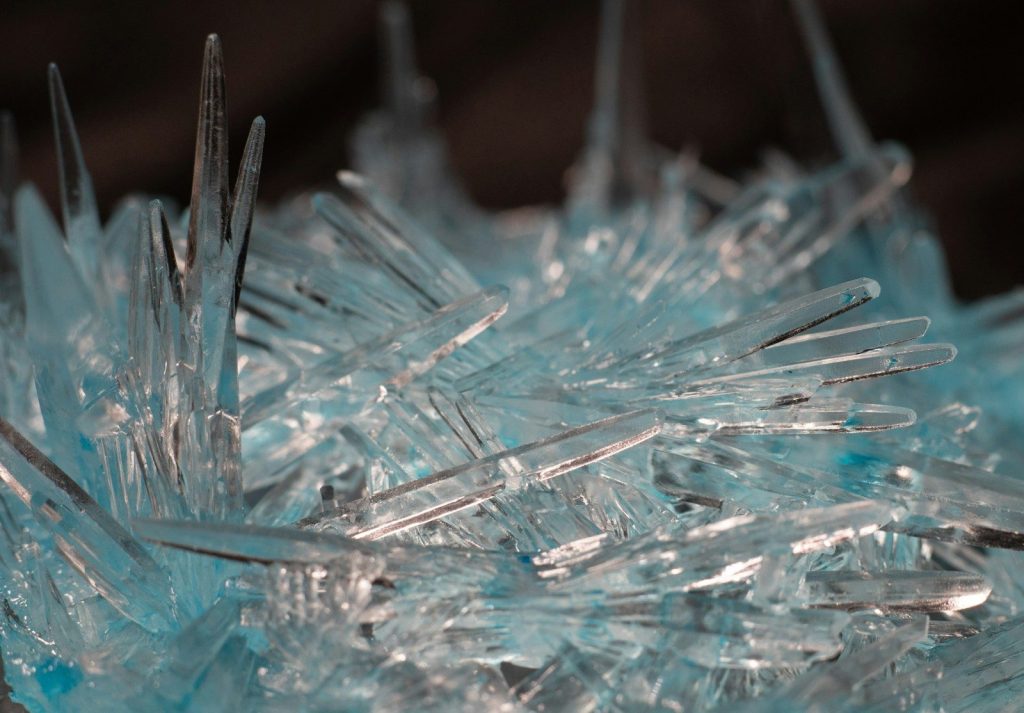
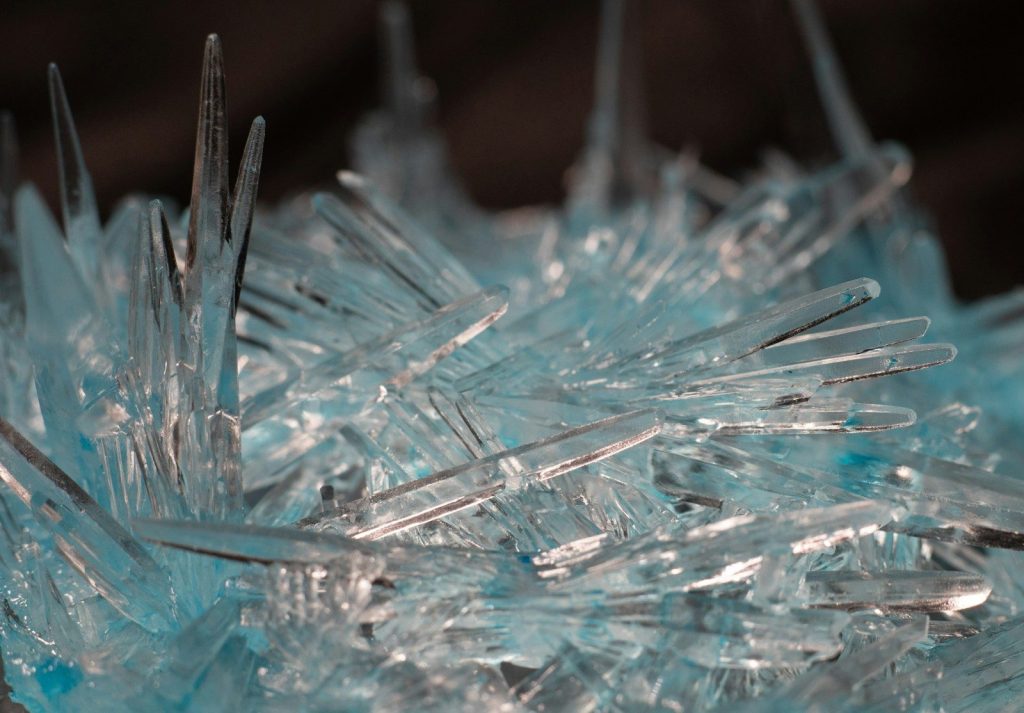
Crystals represent nature’s hidden geometry come to life through chemistry.
The Chemistry of Crystallization: Understanding Supersaturation
How does a clear liquid solution transform into a solid, jagged tower of light? Crystal growing science kits for kids provide a practical, hands-on lesson in the concept of “supersaturation.” This process begins with the relationship between heat and solubility. In most chemical environments, hot water can dissolve significantly more mineral powder than cold water.
The Molecular Dance
By dissolving a specific mineral powder (often ammonium phosphate or alum) into boiling water, children create a solution that holds a much higher mineral content than it normally could at room temperature. As this water slowly cools, it becomes “supersaturated.” The liquid can no longer “hold” all that dissolved material, and the excess molecules are forced out of the solution. This is where the magic—and the science—really begins.
The molecules begin to cling to each other, a process known as nucleation. Most kits provide a “seed rock” or a base with a rough surface to act as the foundation for this process. The molecules stack themselves in perfect, repeating geometric patterns—cubes, needles, or pyramids—depending on the specific atomic structure of the mineral used. Seeing this happen over a period of 24 to 72 hours is a powerful way to teach children that even “inanimate” matter follows a complex internal order governed by physics.
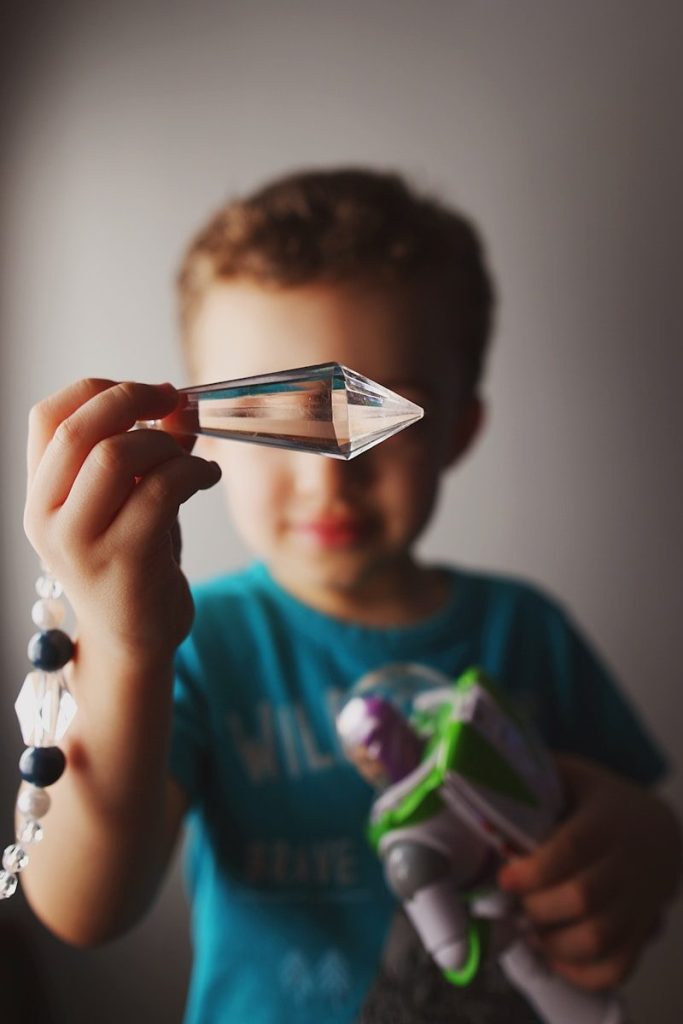
Patience and observation are the two most important tools in a young scientist’s kit.
Nurturing the “Observation” Skill: An Antidote to Instant Gratification
In 2026, where digital entertainment is available at the click of a button, patience has become a rare and valuable virtue. Crystal growing science kits for kids are a fantastic antidote to the culture of instant gratification. Unlike a video game or a social media feed, you cannot rush a crystal. If a child shakes the jar, stirs the solution prematurely, or changes the ambient temperature too quickly, the delicate molecular lattice will collapse or fail to form.
The Scientist’s Logbook
This hobby encourages children to maintain a “Scientist’s Log.” A disciplined approach to the experiment involves checking the growth every morning and noting specific variables:
- Size: Measuring the height and width of the crystal tower each day.
- Clarity: Observing how light passes through the structure as it thickens.
- Environmental Factors: Noting if the room temperature or humidity levels have changed, as these can affect the evaporation rate.
This long-term observation builds the kind of disciplined focus required for any serious career in STEM, from biological research to aerospace engineering. It teaches children that the most impressive results are often the result of time, stability, and careful environmental control.
Advanced Scientific Concepts for Young Minds
For older children or those with a deeper interest in geology, these kits can introduce more complex topics such as Thermodynamics. The rate at which the solution cools directly dictates the size of the crystals. If the solution cools rapidly, many small crystals will form. If it cools slowly, the molecules have more time to find their “perfect” position on the lattice, resulting in fewer, but much larger and more impressive, crystalline structures.
This can be expressed through the relationship of cooling rates and crystal size, illustrating that 10% slower cooling can often result in a 50% larger crystal specimen. It is a lesson in precision that stays with a child long after the experiment is finished.
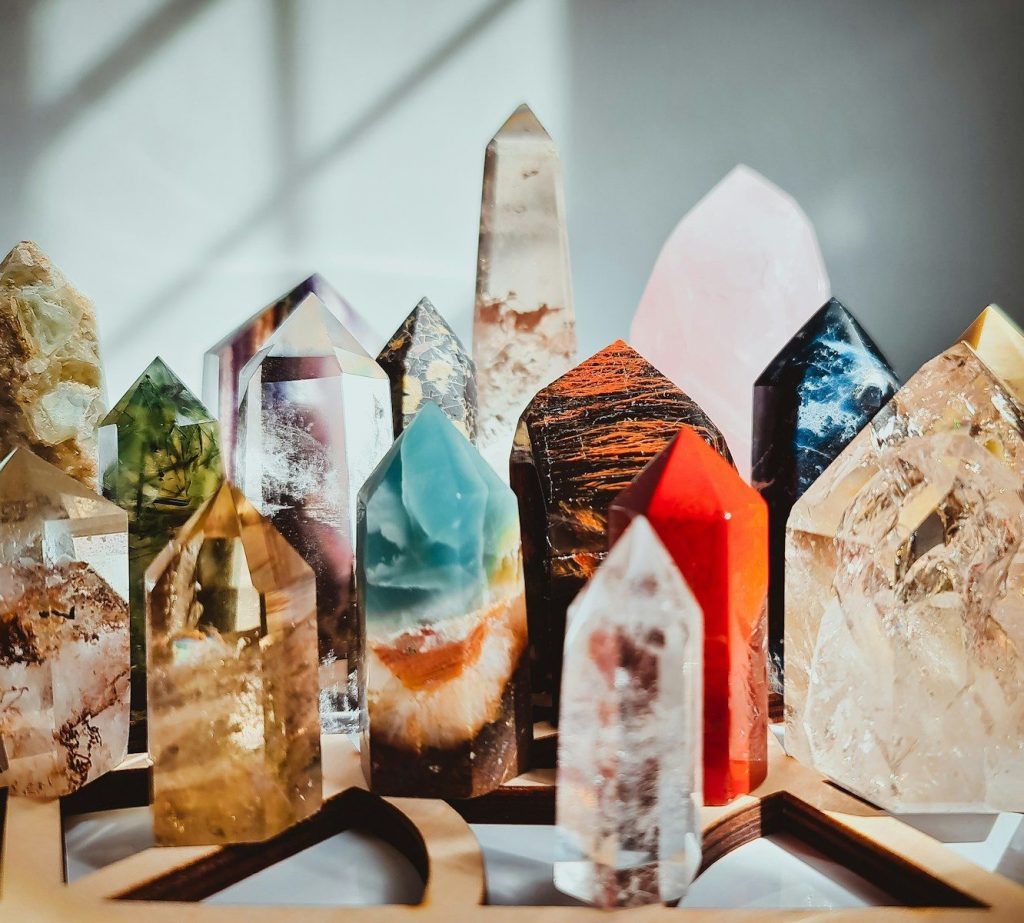
Modern kits allow kids to create a diverse ‘gemstone’ collection in various colors and shapes.
What to Look for in a Safety-First Science Kit
Because crystal growing science kits for kids involve boiling water and chemical powders, safety must be the top priority for parents. When selecting a kit at zixstory.com, prioritize the following features to ensure a safe and successful “lab” experience:
1. Comprehensive Personal Protective Equipment (PPE)
Look for kits that include high-quality protective goggles and latex-free gloves. Beyond the physical protection, wearing PPE makes the child feel like a “real” professional scientist, which significantly increases their engagement and sense of responsibility toward the experiment.
2. Clear, Scientific Manuals
The best kits go beyond “Step 1, Step 2” instructions. They include illustrated booklets that explain the why. Look for manuals that discuss the atomic differences between a diamond and a piece of coal, or how minerals are used in modern technology like smartphones and medical lasers. This provides context, showing that the sparkling rock on the counter is linked to the wide world of industry.
3. Professional Display Bases
Once the experiment is harvested, the resulting crystal is a fragile but beautiful specimen. Premium kits often include a lighted display base or a clear protective dome. This allows the child to showcase their hard work with pride, turning a science experiment into a piece of room decor that serves as a constant reminder of their achievement.
Step-by-Step Success: Tips for Growing the Best Crystals
To ensure your zixstory kit produces a museum-quality specimen, follow these expert “pro-tips”:
- Distilled Water: Use distilled water instead of tap water. Tap water contains minerals and chlorine that can interfere with the chemical reaction and make the crystals look “cloudy.”
- Zero Vibration: Place the growing jar in a location where it won’t be moved or vibrated. Avoid placing it on top of a refrigerator or near a frequently used door.
- Controlled Cooling: After mixing the solution, wrap the jar in a towel for the first 2 hours. This slows down the initial cooling phase, encouraging larger “starter” crystals to form on the seed rock.
Conclusion: The Path to Scientific Mastery
Crystal growing science kits for kids are a gateway to a lifelong love of chemistry and geology. They take a child from being a passive observer of nature to an active participant in its creation. By the time the final crystal is harvested, dried, and placed on its display stand, the young scientist will have learned that with the right parameters and a significant amount of patience, they can grow something truly extraordinary. In 2026, let the spark of curiosity turn into a brilliant crystalline reality. Let the chemistry begin!
Frequently Asked Questions (FAQ)
Q: How long does it actually take for the crystals to reach full size?
A: While you will see initial “growth spikes” within the first 24 hours, the most impressive and structurally sound crystals typically take between 7 to 10 days to reach their full potential. The longer you wait, the more water evaporates, and the more “solid” the crystal becomes.
Q: Is the mineral powder dangerous if it touches the skin?
A: Most educational kits use ammonium phosphate, which is generally safe but can cause mild irritation to sensitive skin or eyes. Always use the provided gloves and goggles, and wash hands thoroughly after the “seeding” process.
Q: Can we grow crystals again using the leftover liquid?
A: Once the main crystal has formed, the remaining liquid is “depleted,” meaning most of the mineral content has already been turned into a solid. To grow a second crystal, you would typically need a “refill pack” of powder to create a new supersaturated solution.
Q: Why did my crystal stop growing or start dissolving?
A: This usually happens if the room temperature increases significantly. If the water becomes warmer, its solubility increases, and it may actually start “eating” the crystal back into the liquid. Always keep the jar in a cool, stable environment.
Q: What happens if the crystal breaks?
A: Crystals are naturally fragile! If a piece breaks off, use it as a learning moment. Look at the internal structure under a magnifying glass. You can even “re-dissolve” the broken pieces into boiling water to start the experiment over again—this is a great lesson in the conservation of matter.
