STEM & Creative Building Toys, Educational Puzzles & Board Games, Post
Architecture in the Making: The Magic of 3D Wooden Puzzles for Kids
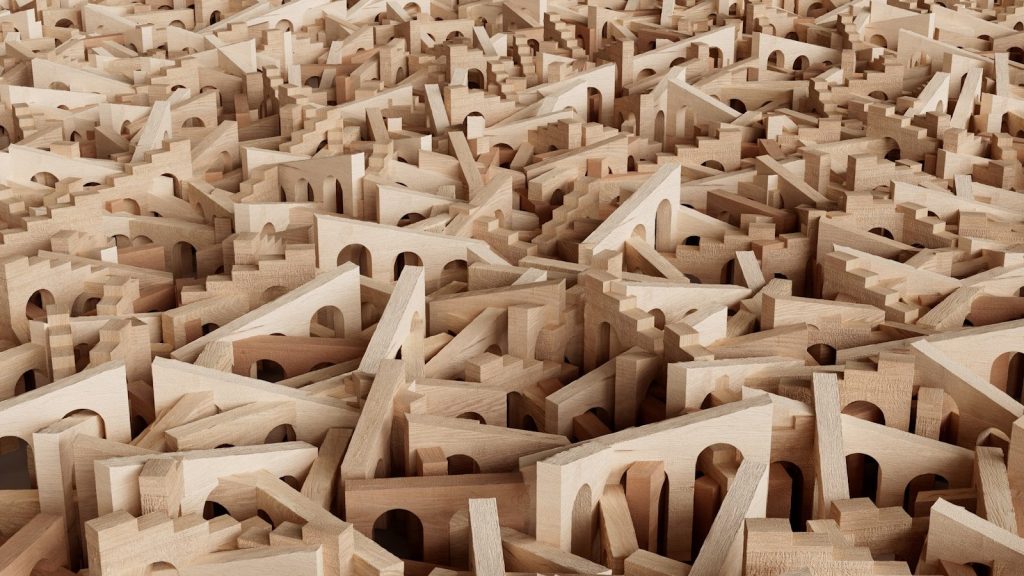
May
Architecture in the Making: The Magic of 3D Wooden Puzzles for Kids
In an age where digital building games often dominate a child’s free time, there is something remarkably timeless and deeply satisfying about the tactile feel of natural wood. While virtual sandboxes allow for infinite creativity, they lack the physical resistance and sensory feedback that only a physical medium can provide. 3D wooden puzzle architecture for kids has emerged as a premier educational hobby in 2026, bridging the gap between a simple jigsaw puzzle and the complex structural engineering of model building. It is a transformative journey that takes a young builder from a flat sheet of laser-cut timber to a stunning, three-dimensional masterpiece of world-renowned architecture.
For parents and educators, these kits represent more than just a quiet afternoon activity. They are a physical manifestation of “modular logic”—the same logic used to build complex software frameworks or optimize large-scale systems. By providing these wooden tools for discovery, you are helping your child develop a “builder’s spirit” that is essential for future innovation in any field, from civil engineering to high-level coding.
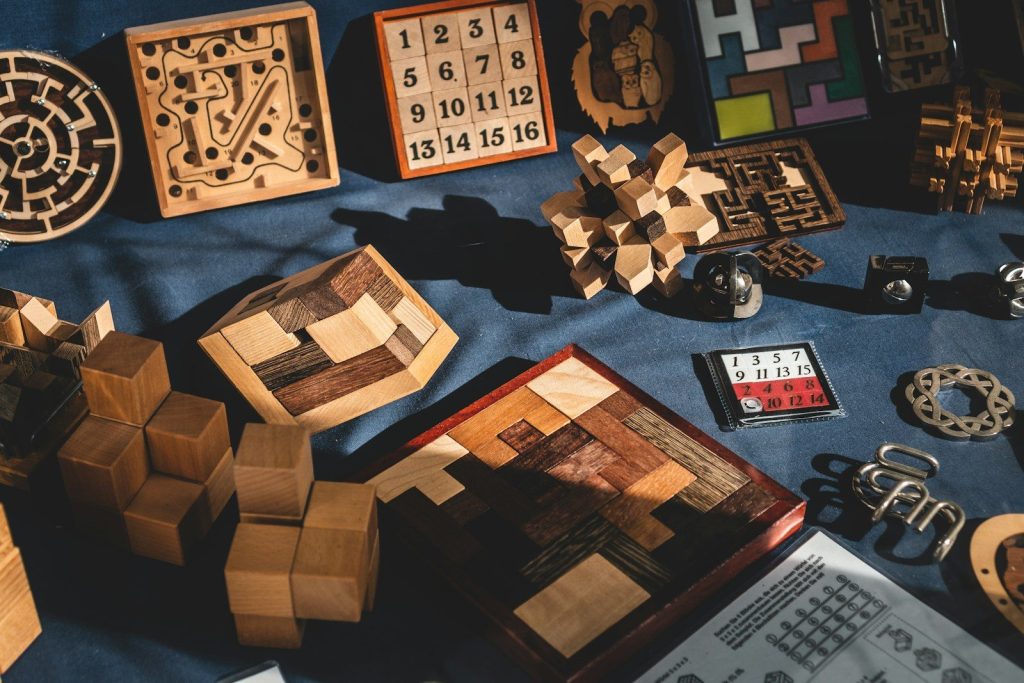
The tactile experience of wood fosters a grounded connection to physical reality.
Beyond Two Dimensions: The Evolutionary Leap in Spatial Awareness
Traditional jigsaw puzzles are excellent for developing pattern recognition and patience, but 3D wooden puzzle architecture for kids takes cognitive development to a significantly higher dimension. To succeed in these builds, a child must undergo a “mental rotation” process—visualizing how a flat, two-dimensional component will function as a load-bearing support in a three-dimensional environment.
The Concept of the “Net” in Architecture
In geometry and architectural design, every 3D object can be represented by its 2D “net”—the unfolded surface of the shape. When a child looks at a sheet of laser-cut wood, they are essentially looking at a complex series of nets. Success depends on their ability to understand the relationship between slots, tabs, and interlocking joints. This is the same spatial visualization skill required by architects to read blueprints or by software engineers to map out data structures.
As they assemble a model of a classic Japanese pagoda or a Gothic cathedral, they aren’t just following instructions; they are learning about the physics of balance and structural integrity. They begin to understand why certain joints are shaped like “dovetails” or why a vertical pillar must be seated deep into a base to maintain a tall structure’s center of gravity.

3D wooden puzzles bridge the gap between flat images and structural reality.
The Engineering Aspect: Interlocking Logic and System Integrity
One of the most impressive features of modern 3D wooden puzzle architecture for kids is the use of “glueless” interlocking technology. This is a masterclass in precision engineering. Unlike plastic building blocks that rely on friction-fit “studs,” these wooden models use complex joinery that relies on the physical properties of the wood itself.
Structural Integrity and Load-Bearing
When a child builds an arch or a dome, they are witnessing the distribution of force. They learn that if one “tab” is not seated perfectly, the entire “system” (the model) may become unstable. This introduces the concept of **system integrity**—the idea that every individual component must be “optimized” for the whole to function. It is a hands-on way to teach the principles of civil engineering:
- Compression: How parts press against each other to create stability.
- Tension: How interlocking joints pull against each other to maintain shape.
- Symmetry: The importance of balanced weight distribution to prevent structural failure.
Precision Mastery: A Workout for Fine Motor Skills
In a world of “instant results,” 3D wooden puzzle architecture for kids encourages a necessary slowing down. These models are not “snap-and-go.” The laser-cut pieces are often delicate and must be removed from their frames with extreme care. This process provides a high-level workout for fine motor skills and hand-eye coordination.
Developing “Extreme” Fine Motor Control
The act of joining two pieces of 2mm-thick plywood requires a level of precision that plastic blocks do not. A child must apply exactly the right amount of pressure—too little, and the joint doesn’t seat; too much, and the wood might splinter. This “calibration” of touch is essential for developing the pincer grip and the steady hands required for future laboratory work, surgery, or intricate mechanical tasks. It is a form of “constructive meditation” that improves focus, emotional regulation, and the ability to enter a “flow state” of deep concentration.
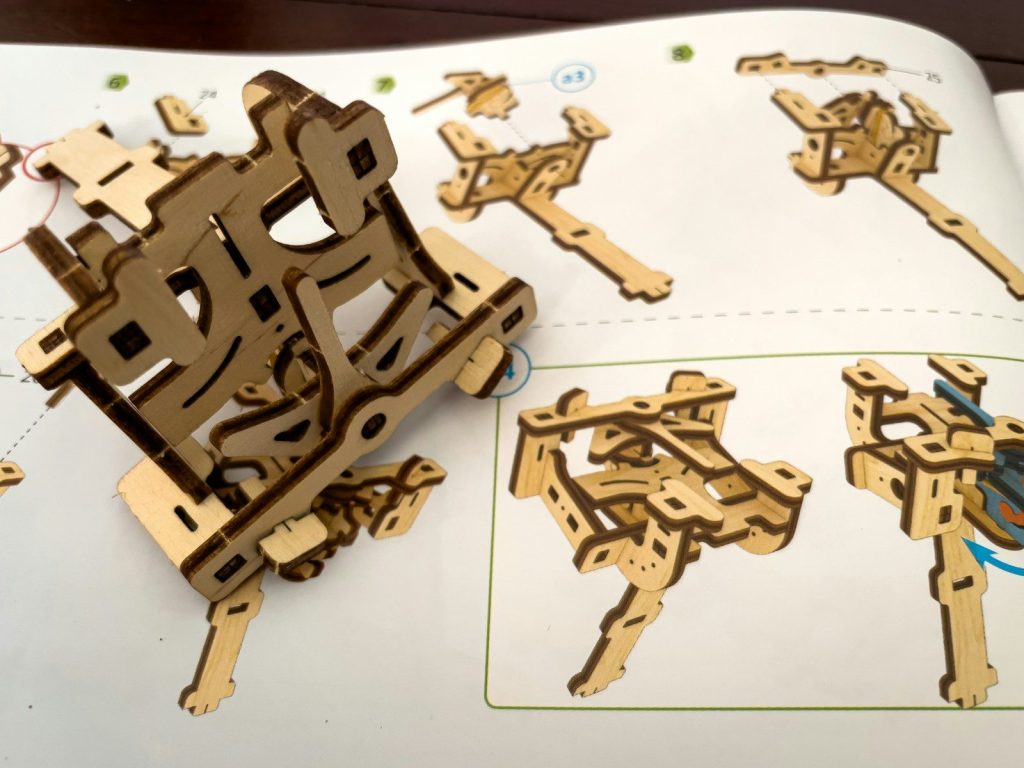
Laser-cut technology ensures that every wooden piece fits perfectly without the need for glue.
History and Geography: Landmarks as Storytellers
Every iconic building tells a story about the culture that created it. 3D wooden puzzle architecture for kids kits often serve as a physical bridge to history and geography. As a child constructs the Eiffel Tower, the Great Wall of China, or the Big Ben, they are not just building a landmark; they are exploring a different era and location.
Many premium kits at zixstory.com include educational booklets that discuss the architectural style (e.g., Romanesque, Neoclassical, or Brutalist) and the engineering challenges faced by the original builders. This contextual learning makes the science of architecture feel relevant and exciting. It inspires a curiosity about the world and a respect for the way humans have shaped their environments over thousands of years—from local marvels like the **Dragon Bridge** to global icons.
Choosing the Perfect Kit: Material and Complexity
To ensure a rewarding experience, it is vital to select a kit that aligns with the builder’s current skill level. Not all wooden puzzles are created equal. Here are the technical specifications to look for:
- Material Quality: High-quality kits use multi-layered plywood (often birch or lime wood). This provides the flexibility needed for interlocking joints without the brittleness of lower-grade MDF.
- Precision Cutting: Look for “Laser-Cut” rather than “Die-Cut.” Laser cutting allows for microscopic tolerances (up to 0.1mm), ensuring that parts fit together without forced effort or messy adhesives.
- Complexity Level: Start with models that have 50-100 pieces for beginners. Once the “modular logic” is understood, children can progress to 300+ piece masterpieces that include moving parts, gears, and intricate decorative spires.
Professional Pro-Tips for Assembly
- The “Sanding” Rule: Use the provided sandpaper to lightly smooth any tabs that feel too tight. Never force a joint.
- Waxing the Joints: For models with moving parts, applying a tiny amount of paraffin wax (a common candle) to the joints will act as a lubricant, ensuring the “architecture” operates smoothly.
- Organization: Keep the laser sheets in their original frames until the instructions call for a specific piece. This prevents “lost parts” and helps maintain the structural integrity of the remaining components.
Conclusion: The Builder’s Spirit
A 3D wooden puzzle architecture for kids kit is more than just a model; it is a testament to the power of human ingenuity and physical geometry. It nurtures both the hands and the mind, teaching children that through patience, precision, and an understanding of system logic, they can build something truly magnificent. By fostering this builder’s spirit, you are preparing them to navigate the complex architectures of the future—whether those are built of wood, steel, or code. Start your architectural journey today and watch a masterpiece rise from the wood!
Frequently Asked Questions (FAQ)
Q: Is glue really not required for these models?
A: Most premium 3D wooden puzzles utilize “friction-fit” and “interlocking” technology. When the laser-cut tolerances are high enough, the pieces hold themselves together through mechanical tension, eliminating the need for messy glues.
Q: What happens if a piece breaks?
A: Because wood is a natural material, thin pieces can occasionally snap. High-quality kits usually include a “spare parts” section for the most delicate components. If a critical piece breaks, a tiny drop of wood glue or “super glue” can usually repair it invisibly.
Q: How long does a typical architecture model take to complete?
A: It varies by piece count. A 100-piece model usually takes **1.5 to 2.5 hours**, whereas a complex 350-piece cathedral or castle can take anywhere from **6 to 10 hours** of focused work.
Q: Can these puzzles be painted?
A: Yes! Because they are made of natural wood, they take acrylic paint and wood stains very well. However, we recommend painting the parts *after* assembly to ensure the paint layer doesn’t make the interlocking joints too thick to fit.
Q: Are these kits eco-friendly?
A: Yes. Most kits are made from FSC-certified wood and use sustainable laser-cutting processes. Compared to plastic building sets, they are significantly more biodegradable and environmentally conscious.
