Educational Puzzles & Board Games, Post
Building Focus: The Benefits of Wooden Stacking and Balancing Games
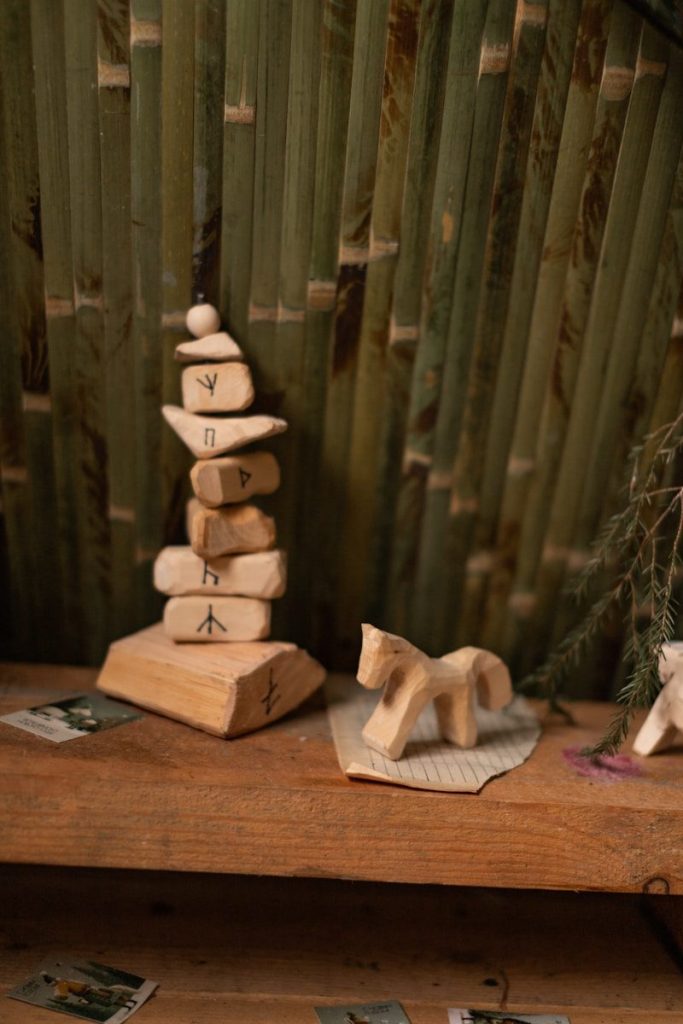
May
Building Focus: The Benefits of Wooden Stacking and Balancing Games
In a modern 2026 world characterized by rapid-fire digital distractions and high-speed imagery, there is something remarkably captivating and grounding about a simple pile of wooden blocks. Whether it is a classic tower-tumbling game or a sophisticated animal-shaped balancing challenge, wooden stacking and balancing games are far more than just playroom staples; they are essential instruments for a child’s holistic development. These games are deceptive in their simplicity; while they appear to be basic play, they require intense mental concentration, a highly steady hand, and an early, intuitive understanding of the fundamental laws of physics. They represent the ultimate test of patience and precision for young, growing minds.
Unlike electronic toys that provide instant, superficial light and sound rewards, wooden stacking and balancing games offer a more profound, tactile satisfaction: the reward of seeing a physical structure stand defiantly against the pull of gravity. For a child, this is a lesson in “system stability”—an early precursor to the logical frameworks found in Information Technology or structural engineering. If you are seeking to help your child develop “laser-sharp” focus and technical resilience, balancing games are a perfect, screen-free addition to your home.
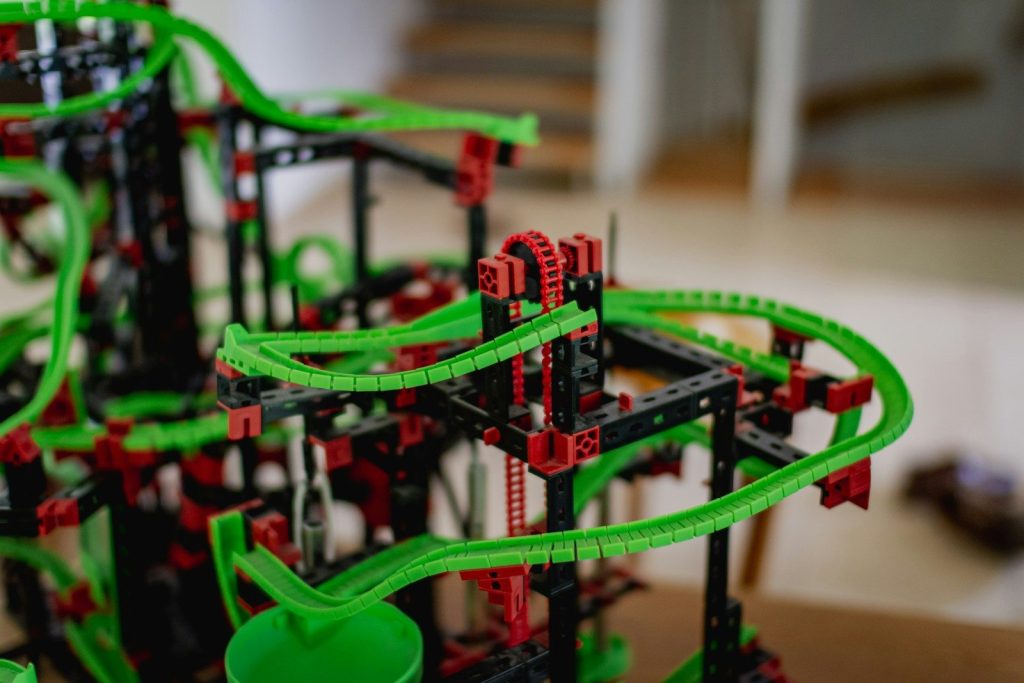
Stacking games teach children that steady hands and focused minds lead to great heights.
The Physics of Play: Mastering Gravity and Equilibrium
Every time a child engages with wooden stacking and balancing games, they are essentially conducting a high-stakes mini-physics experiment. Without the aid of a textbook, they learn through direct, tactile experience about the “center of gravity.” They quickly discover that the universe has rigid rules: if a block is placed too far to the left, the tower wobbles; if it is placed with too much force, the resulting vibration causes a systemic collapse.
The Concept of the Center of Mass
This hands-on exploration helps children grasp the abstract concepts of weight distribution, symmetry, and equilibrium. In physics, an object is stable as long as its “center of gravity” remains directly over its base of support. When a child stacks an irregular shape—like a wooden moon or a curved animal—they are solving a complex equation of mass and balance.
They are learning that for a structure to remain in Equilibrium, the sum of the forces acting upon it must be zero. Wooden stacking and balancing games turn these invisible, mathematical forces into a tangible reality that a child can feel in their fingertips and observe with their eyes.
Developing “Pincer” Precision and Fine Motor Mastery
The technical success of any build in wooden stacking and balancing games depends entirely on the child’s fine motor control. To place a block without toppling the entire structure, a child must utilize the “pincer grasp”—the highly coordinated use of the thumb and index finger. This is the exact same muscle coordination required for holding a pencil, using professional scissors, or performing intricate tasks like buttoning a shirt or handling small electronic components.
Neurological Hand-Eye Coordination
The slow, deliberate movements required by balancing games provide a high-level workout for the small muscles in the hands and wrists. This is more than just physical exercise; it is a neurological calibration. As the tower grows taller and the “stakes” get higher, the child must refine their movements even further, developing a level of physical self-control that few other toys can match. This attention to minute detail is a foundational skill for future Front-End Developers or hardware specialists who must manage precise layouts and delicate physical systems.
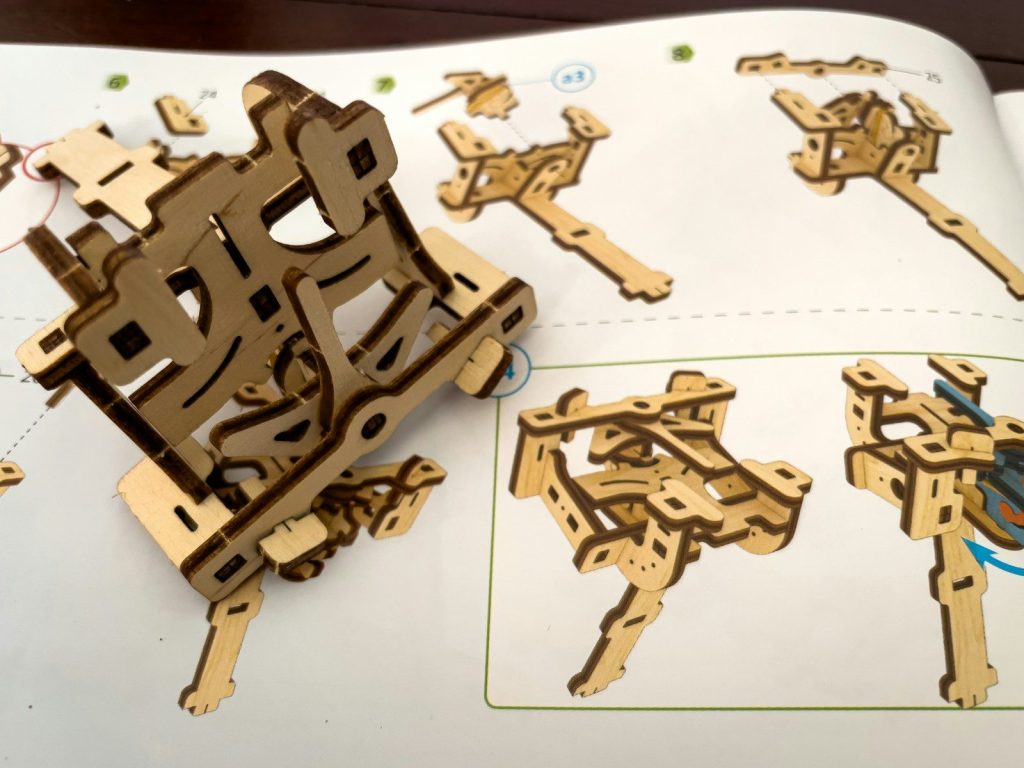
Modern balancing games use creative shapes to increase the challenge and spark imagination.
The Psychology of Resilience: Learning through “Failure”
In the world of wooden stacking and balancing games, the tower *will* eventually fall. This is an unavoidable physical truth. For a young child, this moment of collapse can be one of intense frustration. However, this is precisely where the most significant emotional benefit lies. Much like debugging a piece of TypeScript code, the “crash” provides the most valuable data for the next attempt.
Building Emotional Regulation and Grit
When the blocks tumble down, the child is faced with a critical choice: succumb to frustration, or analyze the “bug” and start again. Most children, driven by innate curiosity, choose to start again, often implementing a new strategy—perhaps widening the base or choosing a more symmetrical block for the midpoint. This cycle builds **Resilience** and grit. It teaches them that a failure is not an endpoint, but an opportunity to build a stronger, more stable foundation the next time around. This “builder’s spirit” is essential for long-term success in academic and professional life.
Why Wood is the Professional Choice for Balancing
A common question among parents in Da Nang and beyond is whether plastic blocks are just as effective. At zixstory, we firmly advocate for natural wood for several technical reasons:
- Natural Friction: Wood has a organic texture and friction that plastic lacks. Plastic is often too smooth and slippery, which can make balancing tasks unnecessarily frustrating for beginners. The “grip” of wood allows for more daring, creative architecture.
- Tactile Feedback: The weight and density of wood provide superior sensory feedback. A child can “feel” the weight of the block better, which helps their brain calculate the force needed for a successful placement.
- Durability and Sustainability: High-quality wooden games are heirloom pieces. They are biodegradable and free from the microplastics often found in cheaper alternatives, aligning with the 2026 focus on green energy and environmental stewardship.

The focused concentration required for balancing is a form of constructive meditation.
Comparative Guide: Types of Stacking Games
To ensure your child remains challenged, it is helpful to understand the different “difficulty levels” available in wooden stacking and balancing games:
| Game Type | Primary Skill Developed | Difficulty Level |
|---|---|---|
| Classic Blocks | Basic geometry and spatial awareness. | Beginner (Ages 1-3). |
| Tumbling Towers | Fine motor control and risk assessment. | Intermediate (Ages 5+). |
| Irregular Balancing | Advanced physics and center-of-mass logic. | Advanced (Ages 7+). |
Conclusion: The Persistent Spirit of the Builder
Wooden stacking and balancing games are a testament to the fact that the most effective educational tools are often the simplest ones. They provide a calm, screen-free sanctuary where children can test their physical limits and explore profound scientific principles through the simple act of play. By investing in a high-quality wooden set, you are giving your child the gift of laser-like focus, technical precision, and the persistent spirit of a builder. Whether they grow up to design Restful Web Services or physical bridges, the journey begins with a single block. Get ready to stack, balance, and—most importantly—learn from the moment it all falls down!
Frequently Asked Questions (FAQ)
Q: What is the best age to start with balancing games?
A: Basic stacking blocks are perfect for toddlers as young as **12 to 18 months**. More complex wooden stacking and balancing games that involve specific animal shapes or weighted pieces are ideal for children aged **3 to 7 years old** as their fine motor skills mature.
Q: How can I make the game harder for older children?
A: Much like a “Hard Mode” in a video game like Minecraft, you can introduce constraints. Try “blind stacking” (closing eyes for 2 seconds before placement) or introduce a timer to see how high they can build in 60 seconds. You can even try playing on a slightly uneven surface like a low-pile rug to increase the instability.
Q: Are these games safe for toddlers who still put things in their mouths?
A: Always verify the size of the components. For younger children, ensure the wooden stacking and balancing games feature large pieces that are not choking hazards. Ensure the wood is finished with certified non-toxic, lead-free paints or natural oils.
Q: How do I maintain wooden toys?
A: Wood is naturally antimicrobial, but you can wipe pieces down with a damp cloth and mild soap. Never submerge them in water, as moisture can cause the wood to swell and lose its “perfect fit” for balancing.
